|
Talk Topics...
|
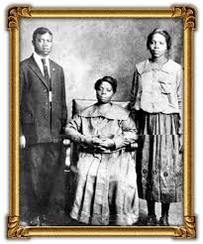
Louis at 15, with his mother and sister.
|
SATCHMO'S SECOND FAMILY: THE KARNOFSKYS Did a Jewish act of kindness change the music of America? |
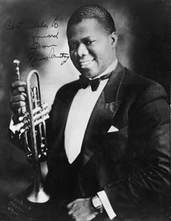
"I shall always love the Karnofskys. I learned a lot from them about how to live—real life and determination…I began to feel like I had a future and ‘It’s a Wonderful World' after all.”--
Louis Armstrong |
|
TO A BLACK CHILD SCRAPING BY AMONG SHOOTINGS AND STABBINGS, street hookers and pimps, and bottom-line squalor, a good home could mean life over death. But in his childhood years—around 1905 to 1915--Louis “Dipper” Armstrong found little family support. His beloved young mother Mayann was hardly around, on the streets herself, scratching for a living. His father had abandoned the family. Louis and his sister had to scavenge food from garbage bins.
Recalling the loiterers and drug addicts in his “Black Storyville" neighborhood, Armstrong wrote that "Never a warm word of doing anything important came to their minds.” 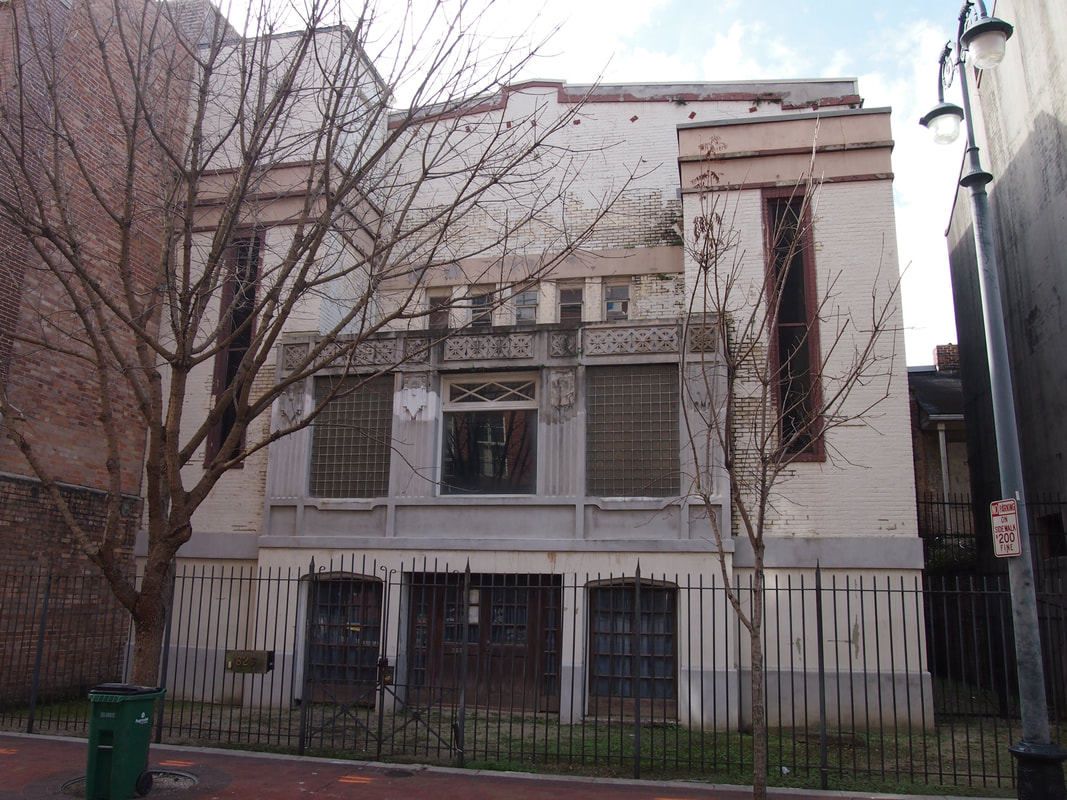
Chevra Thilim Synagogue, New Orleans, 1915. Congregants included the Karnofsky family.
|
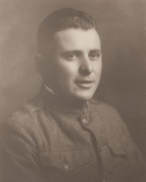 Morris Karnofsky--Louis' "other father." Morris Karnofsky--Louis' "other father."
But another family may have turned the tide. The Karnofskys, a poor but gritty clan of Lithuanian Jewish immigrants, had put down roots near Girod and Franklin Streets, a few blocks from the Armstrongs’ dwelling. When Louis was just seven years old, the Karnofskys brought him in—along with other young blacks—to help with their budding coal and junk businesses.
At the time, Jews nurtured a kinship with blacks, the "comradeship of excluded peoples." But the Karnofskys went a step further: they treated Dipper as family and supported his musical talent, giving him structure—and a sense of self. He worked with them for years and never forgot them. "It was the Karnofskys…who nurtured the spirit of a kid from a broken family, a broken life, and transformed it into a cornucopia.” --Randy Fertel, Ph.D., whose turn-of-century Jewish family owned businesses just blocks from Chevra Thilim. |
IN THIS JOURNEY BACK TO OLD NEW ORLEANS, we’ll cover the Karnofskys’ escape from Eastern European pogroms and their arrival in Louis’ neighborhood. We’ll see the racism pummeling both Jews and blacks, and how the Karnofskys helped their brood (Louis included) to fight through and rise above. We’ll see how, working for the Ks, a pre-teen Louis learned the value of hard work, which would shape his career.
And we’ll learn how from that labor emerged the force of swing rhythm, arguably Armstrong’s largest bequest to American music. As Louis wrote, “It was the Jewish family who instilled in me Singing from the heart. They encourage me to carry on.” 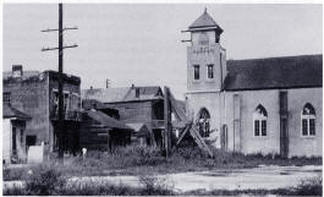
Louis dead-end neighborhood--Perdido Street, New Orleans, turn of century.
|
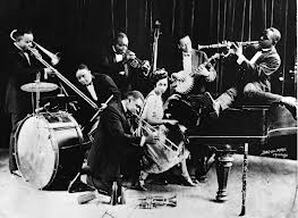
King Oliver's Creole Jazz Band, 1923,
Louis kneeling on slide trumpet.
|
♬ LISTEN: King Oliver's Creole Jazz Band--October 26, 1923
Louis Armstrong, second cornet Workingman Blues This is the breakout band that brought Armstrong out of the New Orleans swamp to Chicago. Most Crescent City musicians then held down day jobs--as factory workers, plasterers, cigar makers, coal cart drivers, and in other "street trades." Louis was no exception.This performance dramatizes the labor of their days, together with the joy and triumph they felt as the sun went down. |